What Outlasts Us
A family trip through Rome, Naples, and Copenhagen — the Sistine Chapel, the Pantheon, and Tivoli Gardens — becomes a lesson in what we build and what we leave behind.
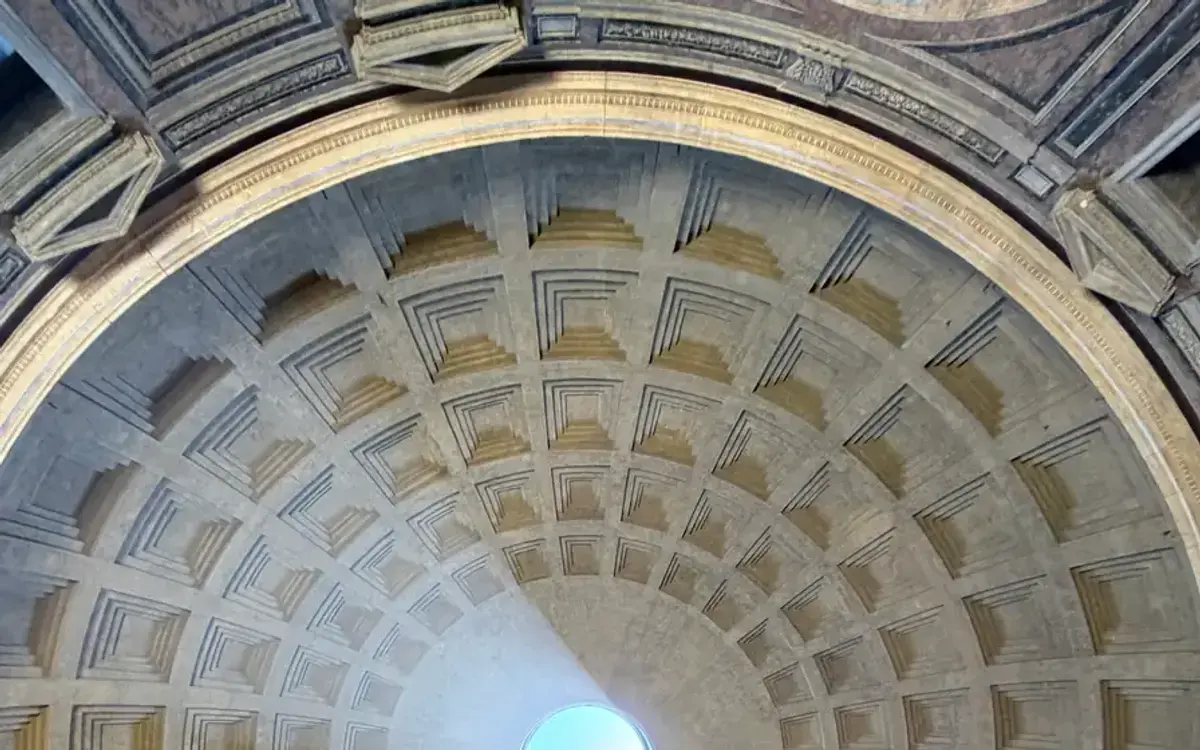
I’m writing this on the flight home from Copenhagen — family in the seats around me, Molly still in Denmark finishing her internship. That was always the plan.
Two weeks ago we were all together: Rome, a side trip to Naples, then Copenhagen to see our daughter. Three stops on the itinerary became three questions I have not stopped turning over: What do you build? How do you solve? What do you inspire?
It is the grown-up version of a question I ask my kids at dinner: what did you build today? Then — harder — did anyone else value it, or was it only for you? A friendship repaired, a problem solved, a sketch, a meal, a line of code. If someone else valued what you built, that was a good day. Rome, Naples, and Copenhagen were three answers at cathedral scale.
Rome — and Naples — in July
We started in Rome — my wife, the kids, and me — walking cobblestones in heat that soaked through everything we wore. Colosseum to Forum to whatever was next on the map, trying to keep up with a city that has been accumulating for nearly three thousand years.
Rome is not a museum. It is a palimpsest — Republic, Empire, Church, modern capital, each layer built on and through the last. You do not start from zero here. You inherit what someone else left half-finished and keep going. That is the first lesson, before you even understand you are being taught: building compounds.
We came for food and photos. Italy had other plans.
We carved out a day for Naples — south on the train, a different flavor of the same country. Pizza, chaos, a port city with history: I thought I knew the script. I did not know about Diego Maradona.
I grew up on the 1986 World Cup — the Hand of God, the Goal of the Century. I knew the player. I did not know Naples had adopted him. When he signed with Napoli in 1984, southern Italy was the poor relation to the industrial north, and the club had never won a league title. Maradona changed that — two Serie A championships, a UEFA Cup — and the city changed with him. He was not just a footballer here. He was hope and identity, proof that someone from the margins could dominate the world. When he died in 2020, Naples mourned like a saint had passed. The murals, the banners, the hearts hung over alleyways — I had no idea until I walked through them.
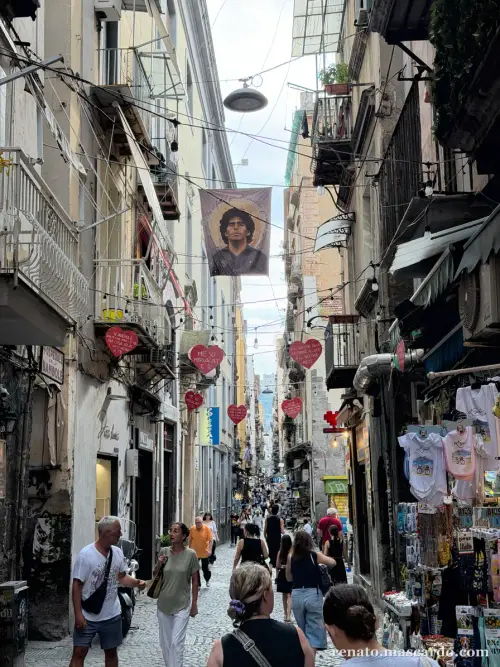
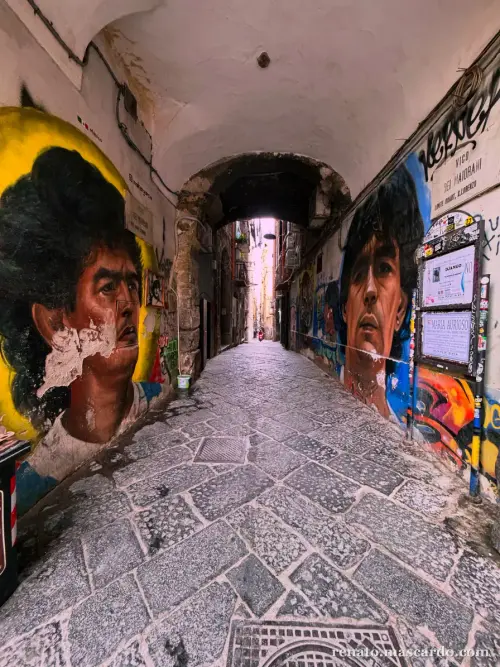
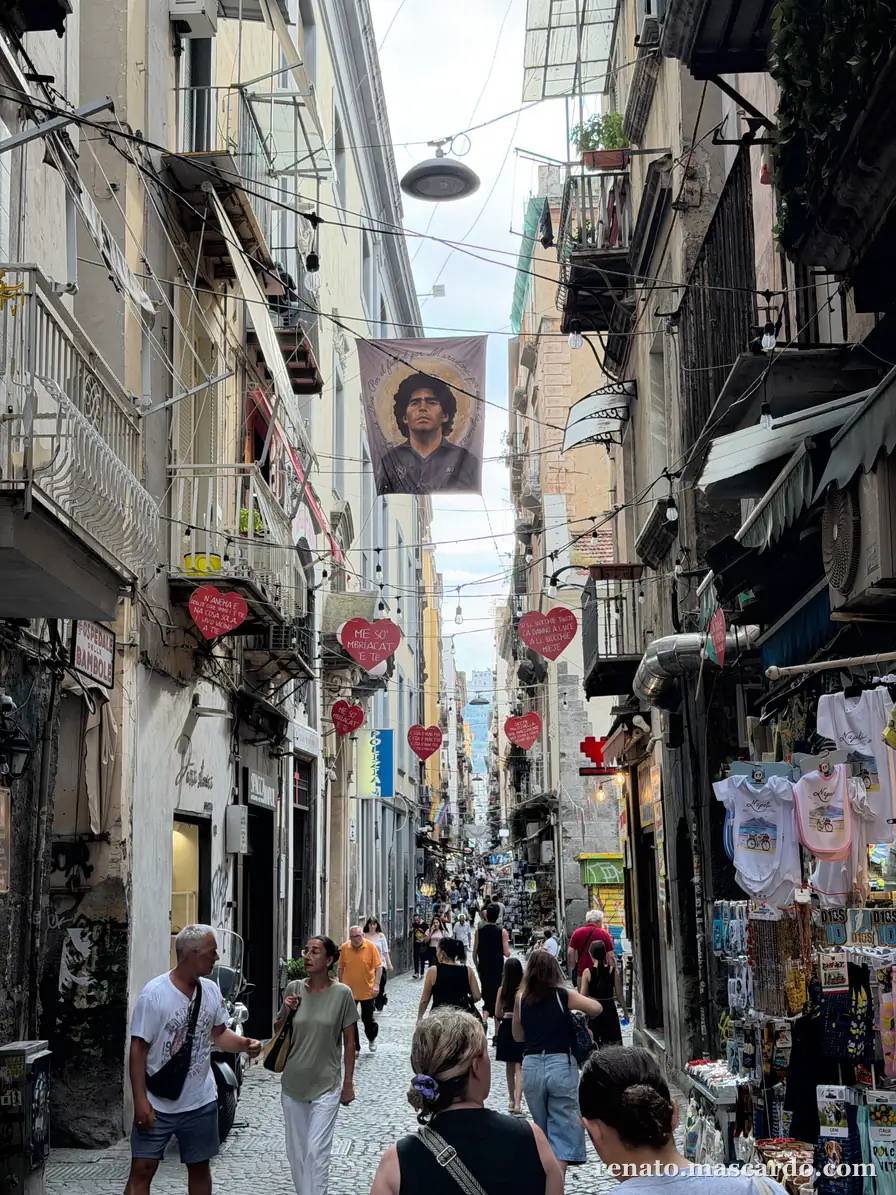
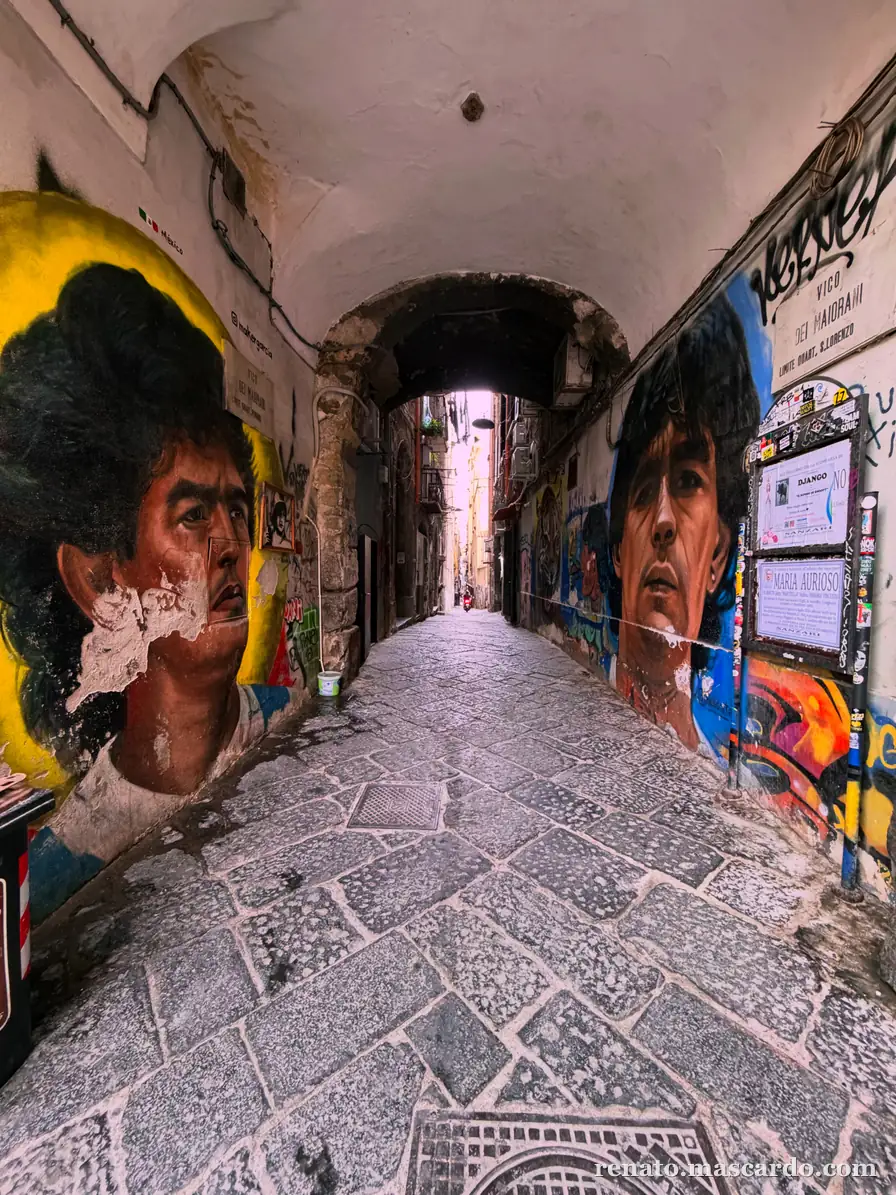
Another kind of legacy — not marble or concrete, but a person so beloved that a city keeps building tributes decades later. Then back on the train to Rome.
What do you build?
The first question waited in Vatican City.
The Sistine Chapel is smaller than you expect — plain from the outside, just another building walled into a corner of Rome. Inside, it is the room where cardinals elect popes. When white smoke rises over the Vatican, this is where it comes from.
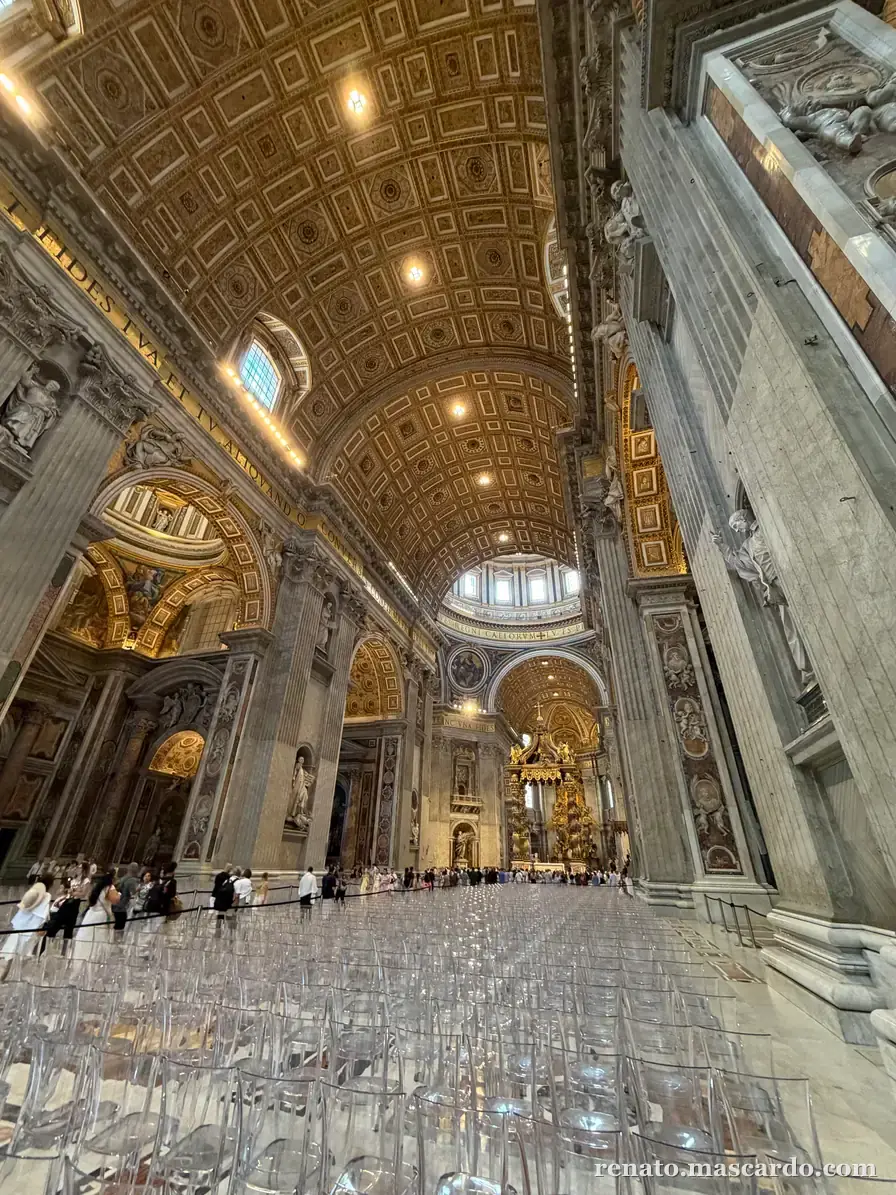
Our guided tour filed in on a crowded summer afternoon. No photographs allowed — a rule that forces you to actually look. I craned my neck like everyone else, taking in panels I had seen reproduced my entire life. The Creation of Adam. The finger almost touching. The prophets who seem to know things the rest of us are still catching up to.
The feeling was humility and awe — not analysis, just the shock of standing in front of something magnificent that has lasted more than five hundred years, painted by a man who did not want the job, and here it is, and I get to see it with my own eyes. Not the art history. The presence.
Then you learn what it cost.
Pope Julius II summoned Michelangelo in 1508. He was a sculptor who had just finished David, not a painter, and he may not have wanted the commission. He took it anyway. The contract called for twelve apostles. Michelangelo found that insufficient — a “poor thing,” he told the Pope — and persuaded Julius to let him design something far more ambitious. Over four years, working on custom scaffolding with his neck craned upward for hours at a time, he painted more than three hundred figures across the curved vault. Fresco is unforgiving — pigment on wet plaster, permanent the moment it dries.
Twenty-four years later, in his sixties, he spent four more years painting The Last Judgment on the altar wall — darker, more urgent, nearly four hundred figures at the end of all things. Two masterpieces. One room. One builder. Michelangelo died in 1564. The chapel remains.
That is what you build when you commit to the hard thing: something that outlives your doubt, your neck pain, your century — and still moves strangers five hundred years later.
How do you solve?
The second question was a few streets away, at the Pantheon.
Outside, Rome was brutal — tourists, vendors, heat with weight. Inside, the air changed. Cooler. Still. And then the light: a slow-moving column from the oculus above, tracking across the floor as the earth turned. No electric bulb. No LED. Just geometry, concrete, and a hole in the sky.
I stood there longer than I had planned. That is the personal memory. The engineering is the reason it is still there.
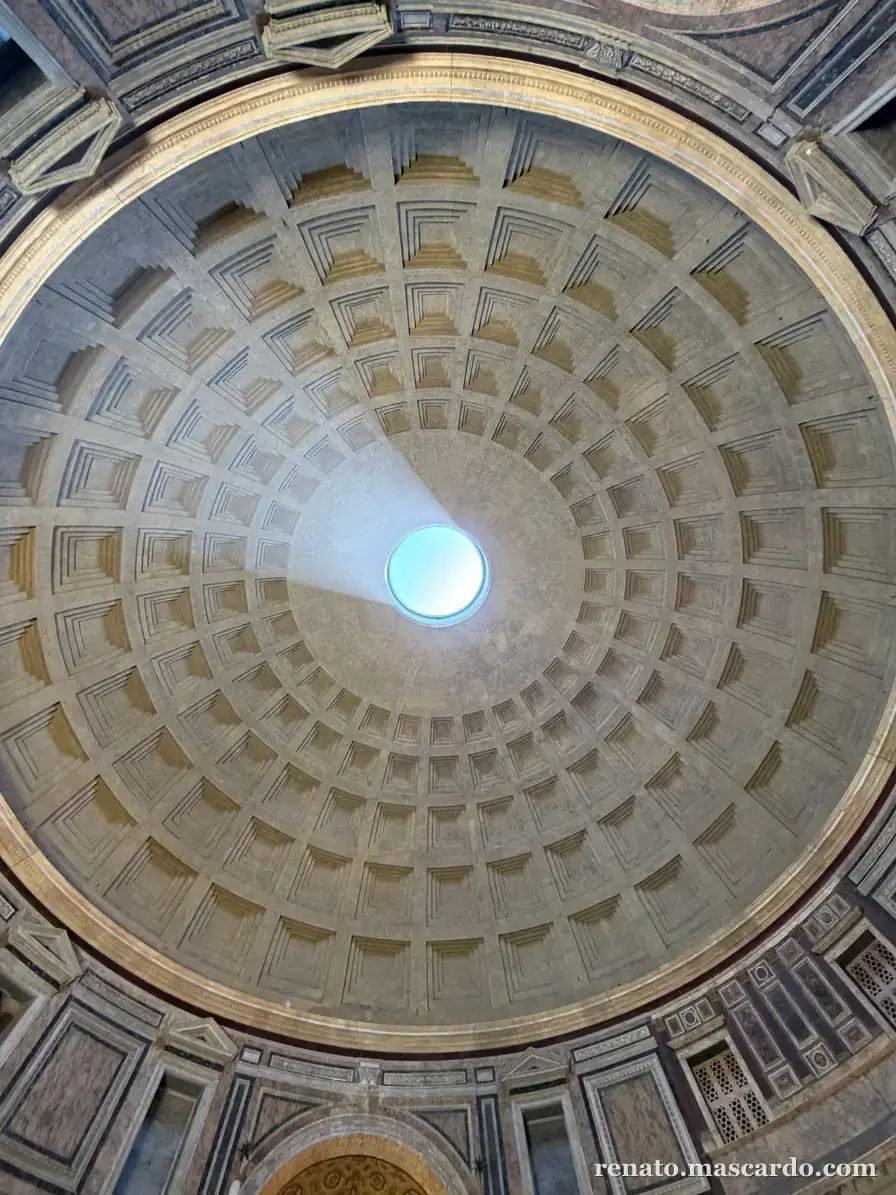
The Pantheon on the Piazza della Rotonda is the third temple on that site — fire and lightning took the first two. Hadrian completed the structure standing today around AD 126 and left the original builder’s inscription on the facade. Inside, the rotunda is a perfect sphere: 43.3 meters in diameter, 43.3 meters from floor to oculus. The dome is still the largest unreinforced concrete dome on earth — tapered from six meters thick at the base to 1.2 at the top, with five rings of coffers cut into the ceiling to shed weight without shedding strength.
In 609 AD, Pope Boniface IV consecrated it as a church, which is a large part of why it survived when so much of Rome did not. Buildings that stay in use stay standing. The floor still slopes toward drains cut two millennia ago, for rain that falls through the open roof.
Solve the problem so completely that the solution becomes a fact of the world.
Copenhagen
Rome is weight — stone, empire, eternity. Copenhagen could not have felt more different. Bicycles, harbor light, a city that seems to have decided that enjoying yourself is a civic virtue.
We flew north to see Molly, interning at a biotech startup — doing the unglamorous, essential work of building something new in a field where the problems are hard and the timelines are long.
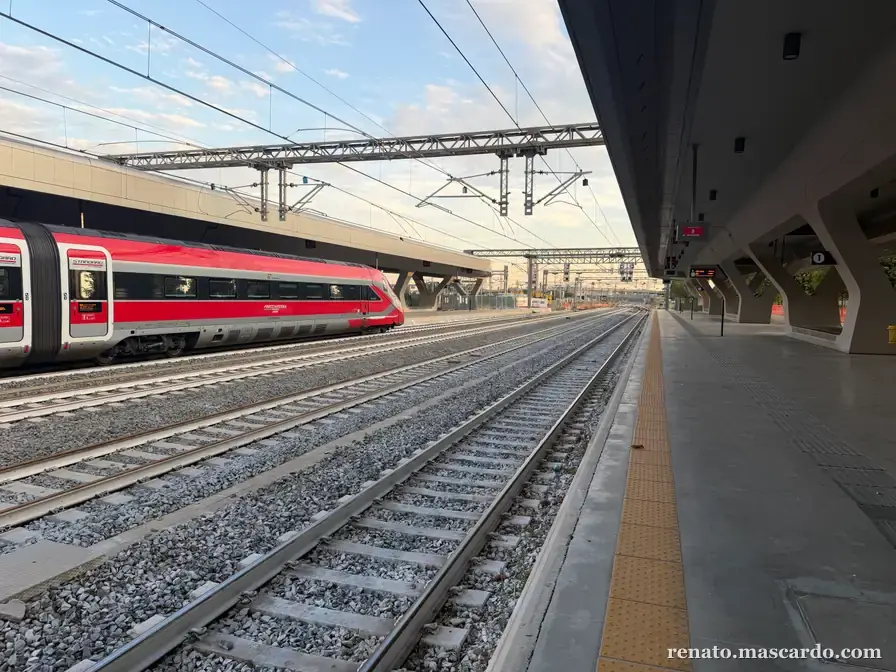
We had dinner with her. Walked her neighborhood. Heard her talk about the work with the particular energy of someone in her twenties who has found something worth showing up for. For a few days the whole family shared one city and one schedule — rarer than it should be now that everyone is building their own lives in parallel.
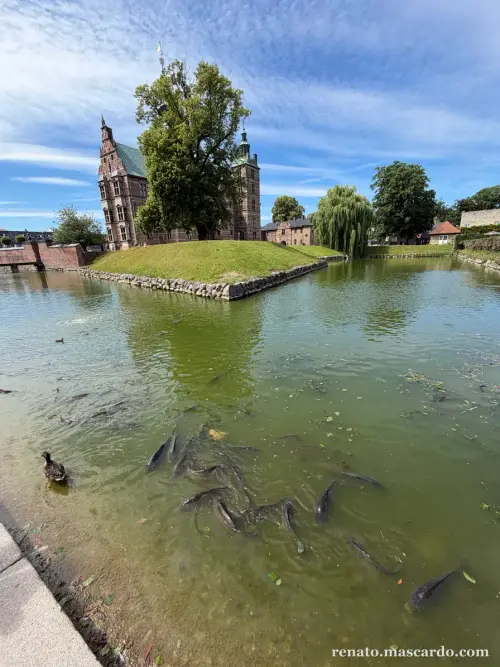
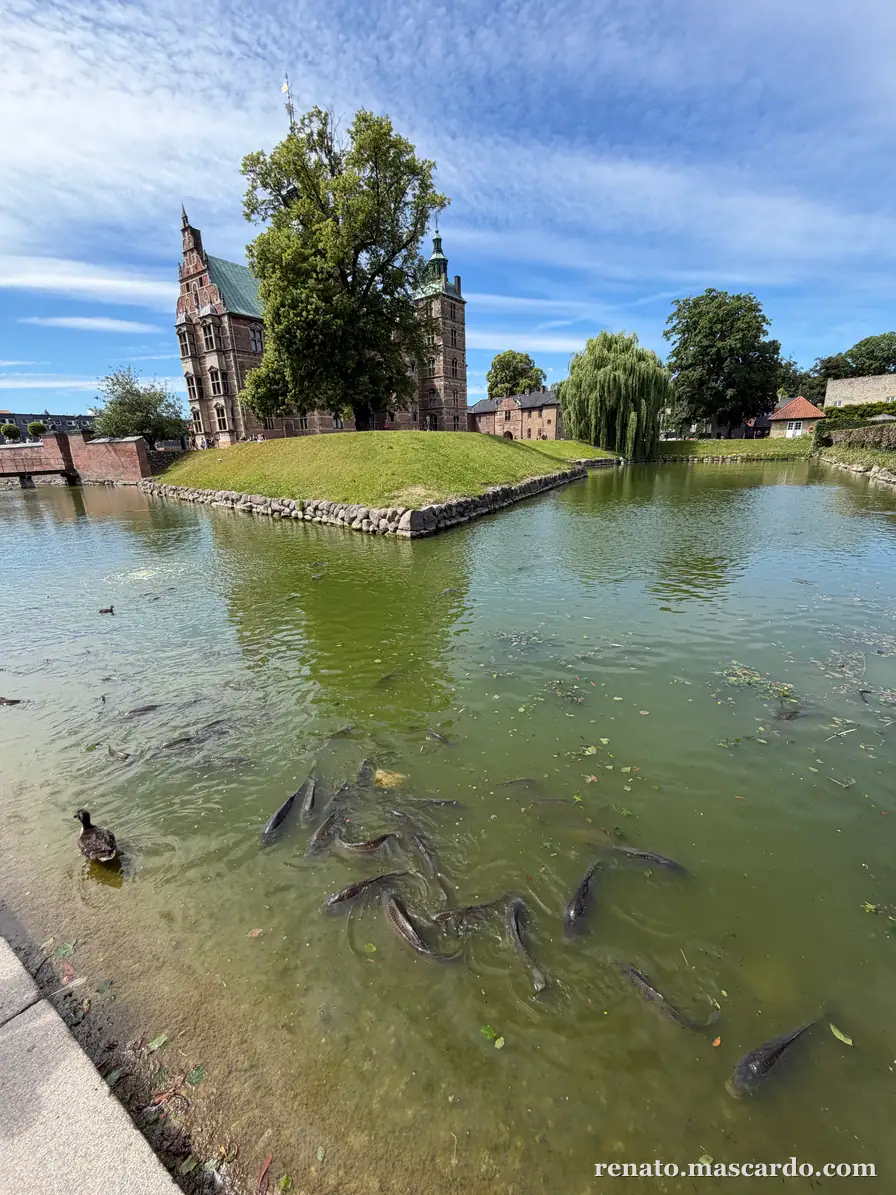
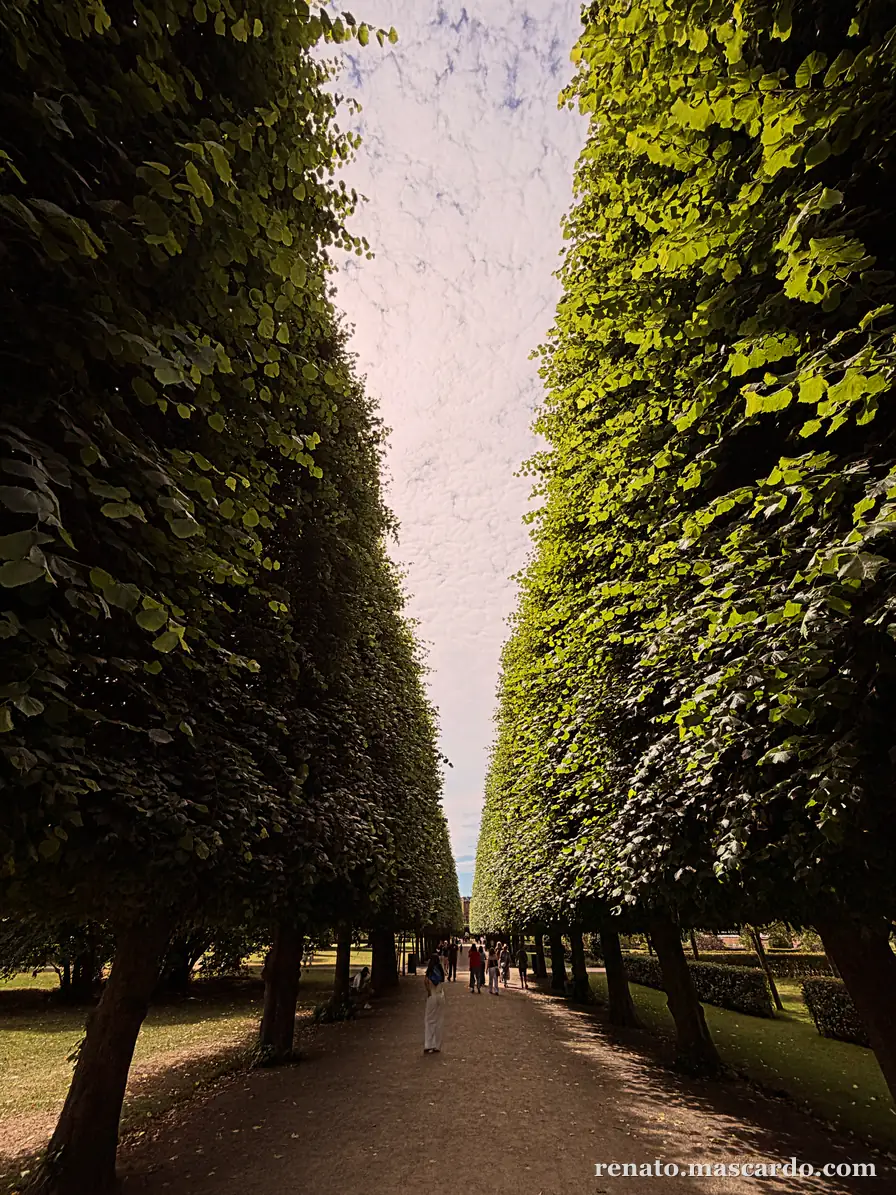
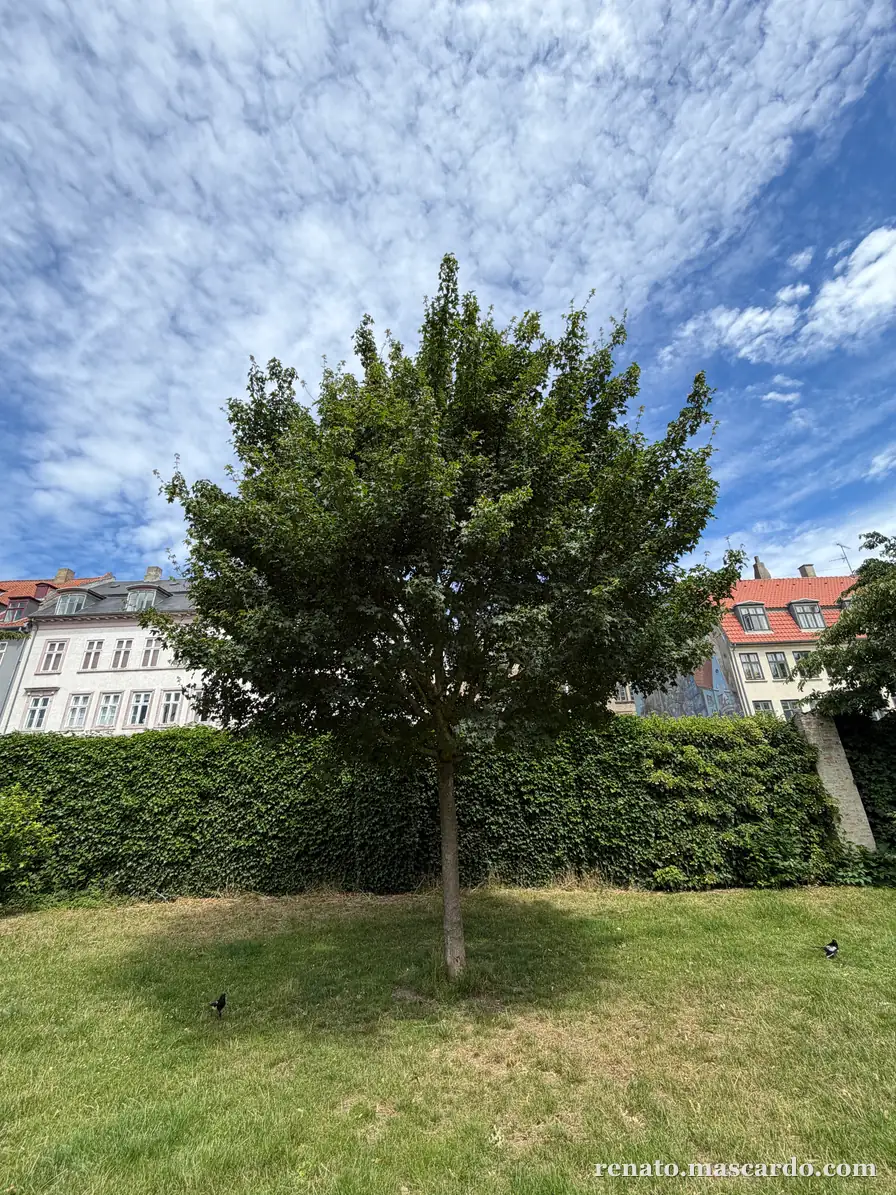
One evening we went to Tivoli.
What do you inspire?
The third question arrived disguised as a Tuesday night at an amusement park.
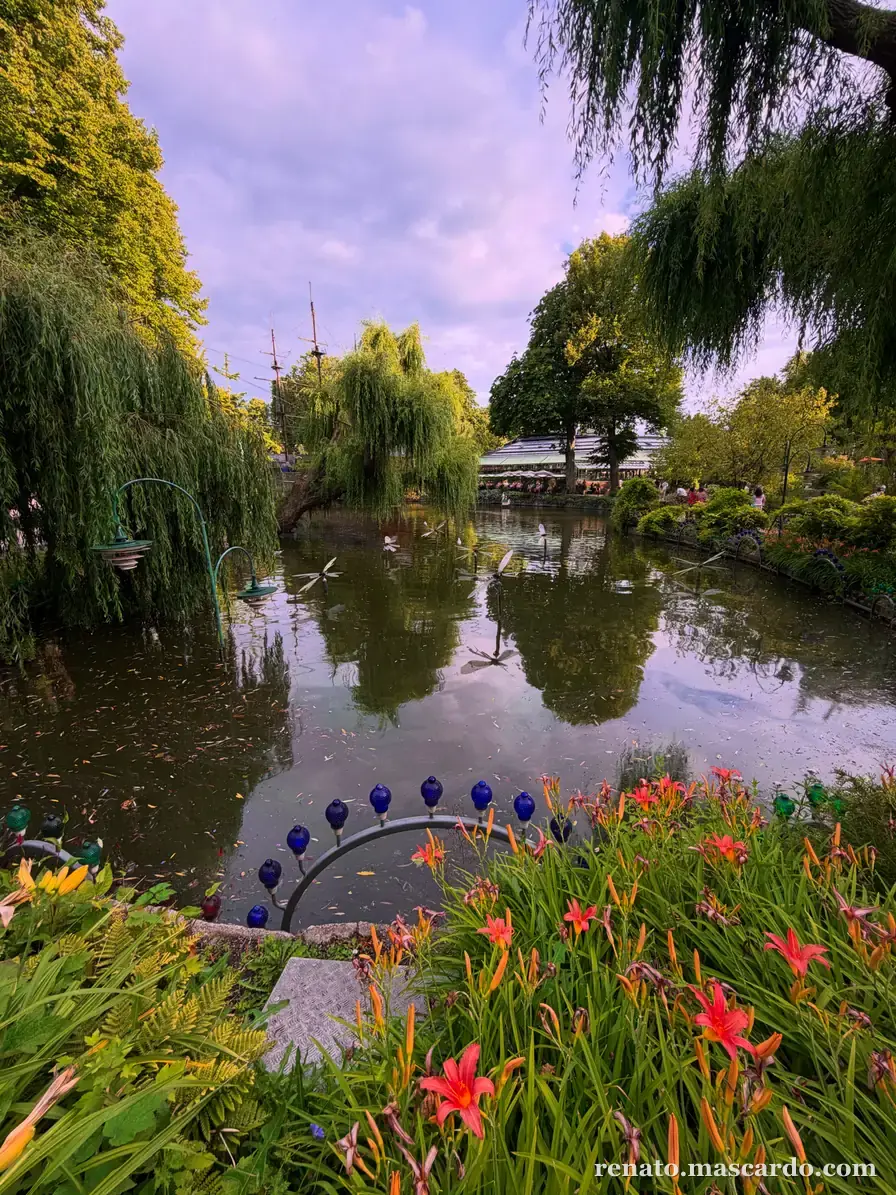
Tivoli Gardens after dark is a different species of wonder than Rome. Lights in the trees. Music from somewhere you cannot quite see. The smell of food and summer. We were just a family — laughing, pointing, riding things — and I was not thinking about legacy at all.
Then we boarded The Flying Trunk — Den Flyvende Kuffert — a dark ride through scenes from Hans Christian Andersen’s fairy tales: the Little Mermaid, the Snow Queen, the Ugly Duckling. The art. The lighting. The intimate, storybook craft of it.
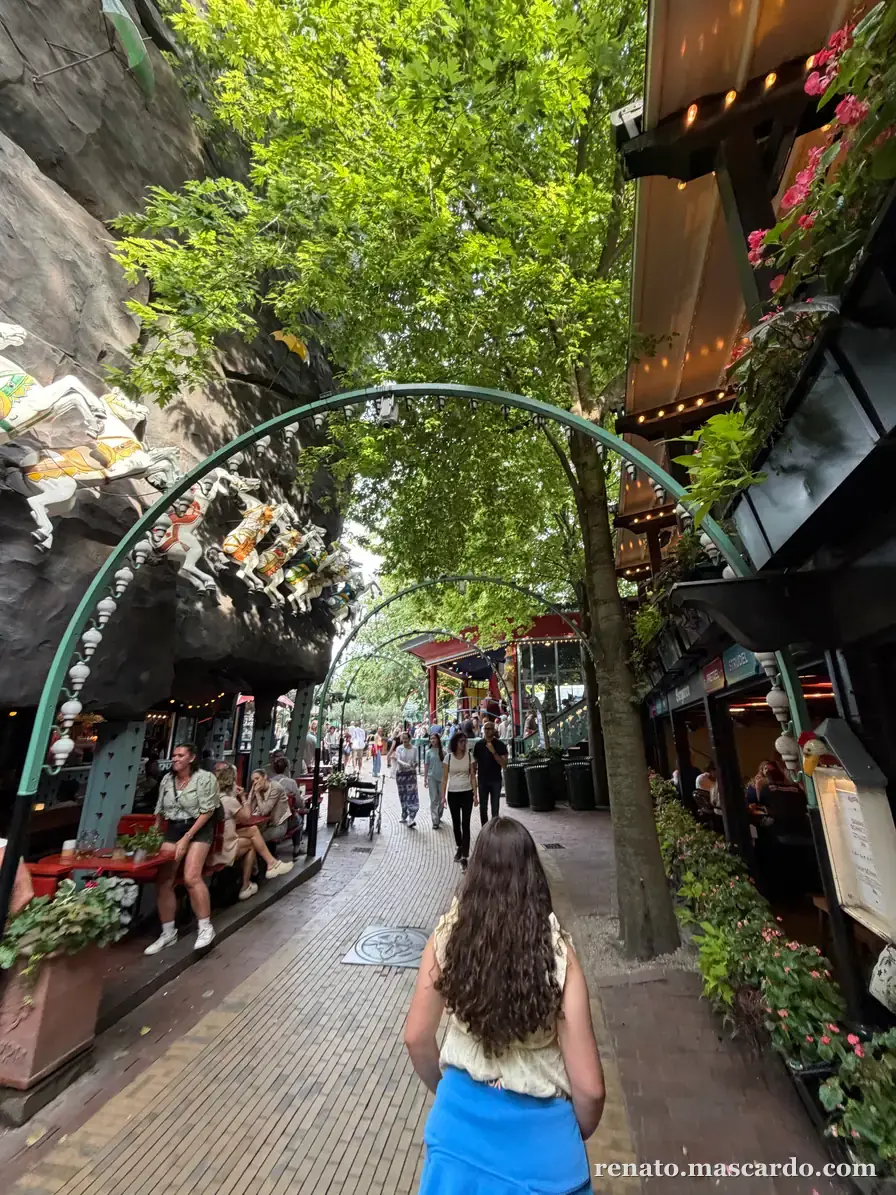
I grew up on Disneyland — Peter Pan’s Flight, It’s a Small World, the smaller Fantasyland dark rides where narrative and motion fuse into something you feel in your chest. Sitting in that carriage, I thought: this is where that came from. Not as archaeology. As recognition.
That was the shock. Not a plaque on a wall. A ride.
Tivoli opened in 1843 — one of the oldest amusement parks on earth, still running in the heart of a European capital. Its founder, Georg Carstensen, persuaded the king to give him land with an argument that has aged well: when people are amused, they do not think about politics. The park was never trying to be ancient. It was trying to be alive — delight as infrastructure, changing with the seasons. Carstensen said Tivoli would “never, so to speak, be finished.”
In 1951, Walt Disney walked these grounds taking notes — the cleanliness, the lights, the family atmosphere after dark. Tivoli was the opposite of the dirty American carnivals that had frustrated him for years. Disneyland opened in 1955. Disney put it plainly: “It all started at Tivoli.” A century after Carstensen, he echoed him almost word for word: Disneyland would “never be completed” as long as imagination remained.
Building as a living thing — not a monument you walk away from, but a garden you keep tending. Tivoli has run for more than 180 years. Disneyland has eclipsed it in reach but not yet in longevity. Both are still being built.
What Molly is building
Molly stayed in Copenhagen when we flew home — internship not finished, summer not done. That is exactly what you want: a kid with something to build and the sense to stay until it is built.
She is solving real problems in a field where the results might outlast all of us. Pantheon thinking, in a lab coat instead of concrete.
I have spent most of my career in the same business, even when I called it something else — software companies, engineering teams, products that either worked or didn’t, startups where the runway was measured in months and the ambition in years. The pattern is always the same: find a problem worth solving, assemble people who care, build something real, learn from what breaks, keep going. Rome did not become Rome in a quarter. Neither does anything worth building.
Chamath Palihapitiya put it sharply in a recent All-In clip: the useful divide is not rich versus poor — it is makers versus takers. Artists, electricians, scientists, parents, anyone who builds something another person values. Versus the commentators, critics, and armchair experts who watch from the sidelines. I do not sign on to every beat of that argument, but the parenting lesson is the one I keep: build something, then ask whether anyone else valued it. That is the test.
Whether you are pouring concrete, shipping code, painting a ceiling you did not want to paint, or designing a ride through fairy tales, you are making a bet that what you build will matter to someone after you are gone. Sometimes that bet pays off in marble. Sometimes in a garden that inspires another builder across an ocean. Sometimes in a daughter who has found her own thing to build.
The legacy of building is not only what you leave behind. It is what you set in motion.
So I will ask the question this trip pressed into me, somewhere west of Greenland:
What are you building?
Not what you manage. Not what you attend. Not what you critique from the sidelines. What you are actually building — with your hands, your team, your years — that someone else might value after you are gone.
The magic is not in the marble. It is in the decision to build at all.
Husband, Father, Friend, Technologist, Entrepreneur and Amateur Humorist
Continue reading

Work after 25 years.
25 years ago this summer three buddies of mine made our way across Europe. We all graduated college and were doing the customary post-graduation Eurail…

Press Release: PepsiCo Goes Innovation Hunting With 20 Tech, Media Start-Ups During Two-Day PepsiCo10 Summit
Here is the official press release from PepsiCo on the PepsiCo10 competition. MotiveCast is listed under the Mobile Marketing category.
Perspective is a Gift
The words hung in the crisp Park City air, feeling more real and significant than the mountain peaks surrounding us. "I'm cancer-free."